Κυριακή 13 Δεκεμβρίου 2020

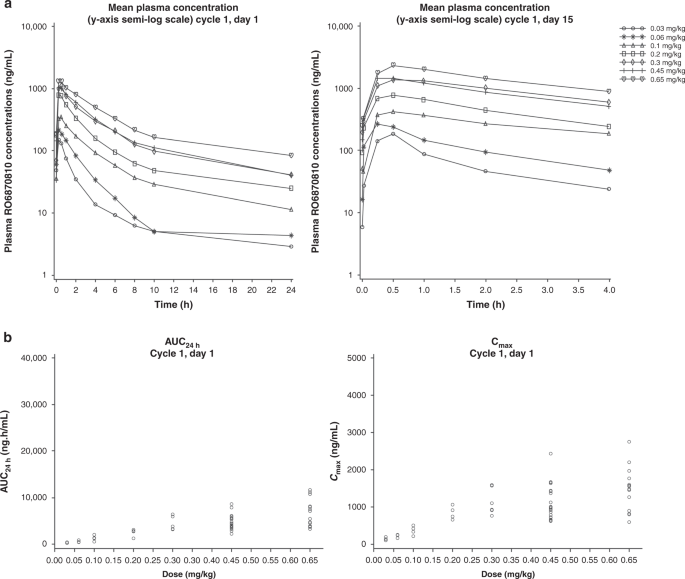
A Phase 1 study of RO6870810, a novel bromodomain and extra-terminal protein inhibitor, in patients with NUT carcinoma, other solid tumours, or diffuse large B-cell lymphoma

a.sfakia shared this article with you from Inoreader
Via Cancer

41416_2020_1180_Fig1_HTML.png

View on the web

Enlarged Vestibular Aqueduct: Hearing Progression and Cochlear Implant Candidacy in Pediatric Patients

a.sfakia shared this article with you from Inoreader
imageHypothesis/Objective: Investigate the rate of hearing loss progression and incidence of cochlear implant candidacy in children with enlarged vestibular aqueduct (EVA). Background: EVA is the most common congenital malformation of the inner ear, is responsible for a large percentage of children with hearing loss, and is associated with hearing loss progression. Rates and degree of progression of hearing loss to cochlear implantation candidacy have not been well described. Methods: Review of children with EVA who presented to a single academic medical center. Audiometric data were reviewed to determine subjects who met criteria for cochlear implantation (≥75 dB pure-tone average) at presentation. For those not meeting criteria, serial audiometric data were reviewed for progression to candidacy. Results: A total of 257 ears met inclusion criteria. One hundred ninety-two (74.7%) met cochlear implant candidacy criteria by age 12, yet only 117 ears (60.9%) actually received implants before turning 13. One hundred fifty-three ears (59.5%) met implant candidacy criteria at presentation. Nearly 50% of those not initially meeting implantation criteria had a ≥15 dB shift in pure-tone average by age 12, with 37.5% of this subgroup meeting implant candidacy criteria before their teen years at an average age of 7.10 years. Conclusion: The majority of children with EVA reach cochlear implant candidacy before reaching adulthood, yet implantation rates for candidate ears remain at 60% and delay in implantation persist. Parents of children with EVA should be counseled on the likelihood of progression and closely monitored for cochlear implant candidacy.
View on the web

The Natural Course of Tympanic Membrane Retractions in the Posterosuperior Quadrant of Pars Tensa: A Watchful Waiting Policy

a.sfakia shared this article with you from Inoreader
imageIntroduction: Tympanic membrane retraction (TMR) is a relatively common otologic finding. Currently, there is no consensus on the optimal treatment of TMR. Some ENT-surgeons advocate surgical correction while others opt for a watchful-waiting policy. Our aim was to investigate the natural course of retraction pockets in the posterosuperior quadrant of the pars tensa in a large cohort of patients. Methods: An observational retrospective cohort study was conducted including patients of all ages with a posterosuperior pars tensa retraction. Primary outcome measure was difference between audiometry at first and last visits. Secondary outcomes were patients' complaints, otoscopic outcomes (Sade classification), and complications (perforation, ossicular chain damage, and/or cholesteatoma). Results: A total of 71 patients with 81 ears and a median age of 23 years (IQR 14–47) were included. The median duration of follow-up was 64 months (IQR 44–102). The mean air-bone gap at first and last visits was 17.9 dB (SD 11.3) and 15.5 dB (SD 12.9), respectively, with a mean improvement of 2.4 dB (p = 0.08). In 10 ears (12%) the hearing level (air-bone gap) deteriorated with 10 dB or more. Patients who presented with a TMR Sade grade I at first visit had significantly better audiometric outcomes than patients presenting with Sade grade III (p = 0.001). Progression to cholesteatoma occurred in one patient (1%), progression to perforation occurred in five patients (6%), and progression to ossicular chain damage occurred in five patients (6%). Conclusions: Otoscopic findings and audiometric results remained stable in most TMRs without treatment. Additionally, audiometry did not worsen during last follow-up. Progression to cholesteatoma, perforation, or ossicular chain damage was rare. Shared decision making regarding TMRs should include a discussion of a wait-and-see policy.
View on the web

The Long-Term Stability of the Electrical Stapedial Reflex Threshold

a.sfakia shared this article with you from Inoreader
imageObjectives: To 1) describe changes in the electrical stapedial reflex threshold (eSRT), within and across patients over time and 2) to identify the clinical relationship between eSRT and an individual's upper limit of loudness. Study Design: Retrospective chart review and analysis using a multilevel modeling approach to describe changes in eSRT over time. Setting: Secondary care center. Patients: Two-hundred five cochlear implant recipients treated at the cochlear implant center during a 3-year time period. Intervention(s): Cochlear implantation, eSRT testing, and, electrical upper limits of loudness. Main Outcome Measure(s): The eSRT over multiple appointments and the cochlear implant recipients' final upper limits of loudness. Results: Analysis of the eSRT testing indicated stability over time; no global trend was seen in trajectory across the population, b = –0.010, p = 0.899. The relationship between eSRT and user upper limits of loudness revealed a mean decrease of 19.47, units for manufacturer 1, 30.53 units for manufacturer 2, and 0.7 units for manufacturer 3. Conclusion: Electrical stapedial reflex thresholds remain consistent for individual subjects over time with implant experience being the only variable correlated with eSRT stability (increase in 5% of one standard deviation with each year of experience). In addition, a clinical relationship between eSRT and behaviorally set upper limits of loudness was identified for all three cochlear implant manufacturers available in the United States.
View on the web

Systematic Review of Endoscopic Ear Surgery Outcomes for Pediatric Cholesteatoma

a.sfakia shared this article with you from Inoreader
imageObjective: Endoscopic ear surgery (EES) has been increasingly adopted to enhance visualization during otologic surgery including pediatric cholesteatoma resection. The purpose of this study is to systematically review the current literature reporting rates of residual cholesteatoma to evaluate outcomes of EES in the pediatric population. Data Sources: PubMed, Embase, Cochrane. Study Selection: Using the Preferred Reporting Items for Systematic Reviews and Meta-Analysis recommendations (PRISMA), we systematically reviewed studies that reported outcomes for cholesteatoma surgery in children using the endoscope. Studies were included if they described the use of the endoscope for middle ear surgery and measured outcomes following cholesteatoma resection in pediatric patients. Data Extraction: Identified articles were assessed for study design, sample size, inclusion of pediatric population, the presence of a comparison group, outcomes measured such as: residual disease rate, recurrent cholesteatoma, audiologic outcome, quality of life measures, and complications. Data Synthesis: Fourteen articles in the literature discussed cholesteatoma outcomes in children when the endoscope was employed. Residual disease rate ranged from 0 to 22% when endoscope was used for dissection compared with 11 to 55% when endoscope was used for inspection or not at all. A meta-analysis was conducted on 11 studies. There was a significant risk reduction in residual disease rates for endoscopic dissection when compared with microscope (RR = 0.48, 95% CI = 0.37–0.63, p 
View on the web

Hearing Loss in Enlarged Vestibular Aqueduct: A Prognostic Factor Systematic Review of the Literature

a.sfakia shared this article with you from Inoreader
imageObjective: There is a need to highlight individual prognostic factors determining hearing loss in enlarged (wide) vestibular aqueduct, as currently clinicians cannot counsel parents about the expected clinical course, nor provide individualized hearing rehabilitation plans following identification at newborn screening. We apply a novel methodology to specifically outline and assess the accuracy of prognostic factors reporting for hearing loss in enlarged vestibular aqueduct. Data Sources: A preferred reporting items for systematic reviews and meta-analyses compliant systematic review (Prospero ID: CRD42019151199), with searches applied to Medline, EMBASE, and Cochrane. Studies with longitudinal design were included between 1995 and 2019. Study Selection: The CHARMS-PF tool was used to assess robustness of prognostic factor study designs. Data Extraction: The QUIPS tool was used to assess for individual study risk of bias. Data Synthesis & Results: Seventy papers were suitable for data extraction. In the six studies with low risk of bias, the domains of enlarged vestibular aqueduct (EVA) morphology, age, hearing thresholds, sex, head trauma, and genotype provided exploratory prognostic factors for hearing loss associated with enlarged vestibular aqueduct. Overall, study heterogeneity and risk of bias precluded reporting by forest plots and meta-analysis. Conclusions: The majority of exploratory prognostic factor studies for hearing loss associated with enlarged vestibular aqueduct are hampered by risk of bias. However, this systematic review identifies potential independent prognostic factors which should be measured, and adjusted for, in subsequent confirmatory studies utilizing multivariate analysis. This would determine the true independent prognostic effects associated with hearing loss in enlarged vestibular aqueduct, while facilitating prognostic model development and the ability to predict individual hearing loss trajectory.

View on the web

Considerations for a Revised Adult Cochlear Implant Candidacy Evaluation Protocol

a.sfakia shared this article with you from Inoreader
imageObjective: To compare the current metrics used in adult cochlear implant candidacy evaluations for consistency and applicability, and to make a recommendation for an updated assessment battery. Study Design: Prospective, multicenter, within-subject clinical trial. Setting: North American cochlear implant programs including private practices, universities, and hospital centers. Patients: One hundred adult hearing aid users scoring 40% or less on monosyllabic words in quiet in the aided test ear who presented for cochlear implantation evaluation. Intervention: Subjects underwent unilateral cochlear implantation. Main Outcome Measures: Speech perception measured via Consonant-Nucleus-Consonant words in quiet and AzBio sentences in noise. Patient-reported hearing disability measured via the Speech, Spatial, and Qualities of Hearing Scale administered preoperatively and at 6 months postoperatively. Results: Significant group mean improvement on all speech perception measures and SSQ subscales postoperatively with possible floor effects observed in objective background noise testing preoperatively and a broad range of variability seen postoperatively. Conclusions: Consonant-Nucleus-Consonant words are an effective tool to clinically evaluate hearing ability over time. Adjustment of cochlear implant screening protocols to prioritize monosyllabic words over sentences in noise as the chief determining factor appears justified, and this test can be supplemented by the SSQ for a holistic and applicable assessment of cochlear implant candidacy.
View on the web