The Association of Academic Physiatrists (AAP) seeks to advocate for policies that are supportive of academic rehabilitation, with elected officials, agency leaders, and other policy makers. Accordingly, the AAP's Public Policy Committee identifies policy issues of importance to the organizational mission, conducts background research on those issues, and develops position statements that articulate the organization's position. These position statements require approval by the Board of Trustees and are used to support advocacy efforts by AAP members. Federal funding for disability and rehabilitation research is an important issue for the AAP and its members. This position statement addresses the need for greater federal funding in this area, better coordination of the agencies providing funding, and an appropriate balance of merit-based funding with funding targeted to building capacity in critical rehabilitation-relevant methodology and content areas. This position paper was reviewed by the Association of Academic Physiatrists Public Policy Committee and the Board of Trustees and approved as a position paper of the Association. John Whyte, MD, PhD, Moss Rehabilitation Research Institute, 50 Township Line Road, Elkins Park, PA 19027, email: jwhyte@einstein.edu Copyright © 2018 Wolters Kluwer Health, Inc. All rights reserved.
from Rehabilitation via xlomafota13 on Inoreader https://ift.tt/2H3twTR
via IFTTT
Κυριακή 15 Απριλίου 2018

Temporomandibular Joint Ankylosis: "A Pediatric Difficult Airway Management".
 | Related Articles |
Temporomandibular Joint Ankylosis: "A Pediatric Difficult Airway Management".
Anesth Essays Res. 2018 Jan-Mar;12(1):282-284
Authors: Sharma A, Dwivedi D, Sharma RM
Abstract
Intubating a pediatric patient with temporomandibular joint ankylosis is a daunting task, and it becomes more challenging with limited mouth opening. Fiberoptic nasotracheal intubation technique is considered a gold standard. We describe an improvised technique of securing airway in the absence of appropriate-sized fiberoptic scope. The endotracheal tube inserted in the left nostril for maintaining depth of anesthesia was advanced under vision by the fiberoptic scope inserted into the right nostril, and with external laryngeal manipulation, the airway was secured with no complications.
PMID: 29628599 [PubMed]
from Anaesthesiology via xlomafota13 on Inoreader https://ift.tt/2HCnFC3
via IFTTT
Comparison between lignocaine nebulization and airway nerve block for awake fiberoptic bronchoscopy-guided nasotracheal intubation: a single-blind randomized prospective study.
 | Related Articles |
Comparison between lignocaine nebulization and airway nerve block for awake fiberoptic bronchoscopy-guided nasotracheal intubation: a single-blind randomized prospective study.
Korean J Anesthesiol. 2018 Apr;71(2):120-126
Authors: Mathur PR, Jain N, Kumar A, Thada B, Mathur V, Garg D
Abstract
BACKGROUND: The preferred management strategy for difficult airways is awake fiberoptic bronchoscopy-guided intubation, which requires effective airway anesthesia to ensure patient comfort and acceptance. This randomized single-blind prospective study was conducted to compare lignocaine nebulization and airway nerve block for airway anesthesia prior to awake fiberoptic bronchoscopy-guided intubation.
METHODS: Sixty adult patients scheduled for surgical procedures under general anesthesia were randomly allocated to two groups. Group N received jet nebulization (10 ml of 4% lignocaine) and Group B received bilateral superior laryngeal and transtracheal recurrent laryngeal nerve blocks (each with 2 ml of 2% lignocaine) followed by fiberoptic bronchoscopy-guided nasotracheal intubation. All patients received procedural sedation with dexmedetomidine. The intubation time, intubating conditions, vocal cord position, cough severity, and degree of patient satisfaction were recorded. Student's t test was used to analyze parametric data, while the Mann-Whitney U test was applied to non-parametric data and Fisher's test to categorical data. P values < 0.05 were considered statistically significant.
RESULTS: The time taken for intubation was significantly shorter in Group B [115.2 (14.7) s compared with Group N [214.0 (22.2) s] (P = 0.029). The intubating conditions and degree of patient comfort were better in Group B compared with Group N. Although all patients were successfully intubated, patient satisfaction was higher in Group B.
CONCLUSIONS: Airway nerve blocks are preferable to lignocaine nebulization as they provide superior-quality airway anesthesia. However, nebulization may be a suitable alternative when a nerve block is not feasible.
PMID: 29619784 [PubMed]
from Anaesthesiology via xlomafota13 on Inoreader https://ift.tt/2ISqjD9
via IFTTT
Jaw Opening Decreases Window to the Deep Parotid Lobe.
 | Related Articles |
Jaw Opening Decreases Window to the Deep Parotid Lobe.
Otolaryngol Head Neck Surg. 2018 Mar 01;:194599818766317
Authors: Lee YJ, Megwalu U, Melara E, Divi V, Fernandes VT, Sirjani D
Abstract
To describe the relationship between jaw opening and access to the deep parotid window, we identified the following distances in 10 human skulls: symphysis to angle of mandible, mastoid tip to angle of mandible, angle of mandible to condylar process, and mastoid tip to condylar process. With the jaw closed and open, these distances were measured with 1 to 3 wooden blocks, each measuring 1 cm, between the upper and lower incisors. The triangular deep parotid area formed by the last 3 distances was calculated. A repeated measures analysis of variance showed a significant decrease in the deep parotid area with increasing interincisal distance ( P < .01). A generalized estimating equation model demonstrated a statistically significant decreasing area of the deep parotid window with increasing interincisal distance. These results suggest that nasal intubation may improve access to the parotid window.
PMID: 29609515 [PubMed - as supplied by publisher]
from Anaesthesiology via xlomafota13 on Inoreader https://ift.tt/2q3fjf0
via IFTTT
Σάββατο 14 Απριλίου 2018
EMS inventions: Where did they come from?

from EMS via xlomafota13 on Inoreader https://ift.tt/2IF8KXe
via IFTTT
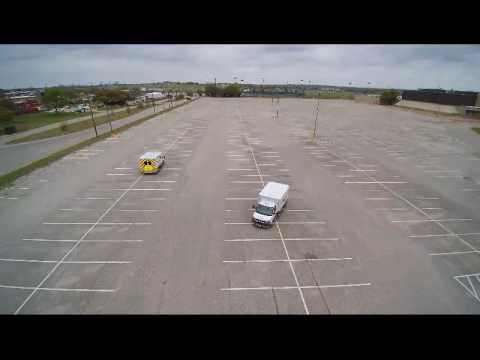
MedStar slalom
from EMS via xlomafota13 on Inoreader https://ift.tt/2H5JcD4
via IFTTT
MedStar AJody Stevens Banana Microphone

from EMS via xlomafota13 on Inoreader https://ift.tt/2EebGHw
via IFTTT
Εγγραφή σε:
Αναρτήσεις (Atom)